


Words and photo’s by Richard Rinn
If you’ve ever been in an urban area or park in Britain, you’ve more than likely seen a good number of lime trees, but perhaps never really given them much thought. I was certainly like this around fifteen years ago, as I began to read Bulgakov’s The Master and Margarita for the first time. I hadn’t previously taken very much interest in trees at all, beyond noticing that urban areas without them were distinctly unappealing to me. In the book, linden trees are mentioned—as I recall it—on a number of occasions, and to the exclusion of other tree species (what of the lime trees, you may wonder). Somehow this piqued my interest, as I wondered if the author was communicating something that I wasn’t appreciating due to ignorance and/or factors relating to the cultural and geographical separation between us, or the fact that he’d written it the best part of a century before I got round to reading it. Were they found in particularly grand (or otherwise) areas? Was there folkloric significance to them? I was propelled to find out…
Zero trips to my local library later, via the technological marvel of the day then known as ‘the internet’ I had discovered that linden trees are known in Britain as lime trees (and sometimes in the U.S. as basswood). Subsequently, whenever I’ve pointed a lime tree out to a usually mildly nonplussed person who happens to be with me as we pass one, I feel compelled to further point out that the citrus fruit they are probably now visually seeking will not be found where they’re looking. Apparently the name lime is something that came about via vernacular evolution of the Germanic linden over time in England many centuries ago.
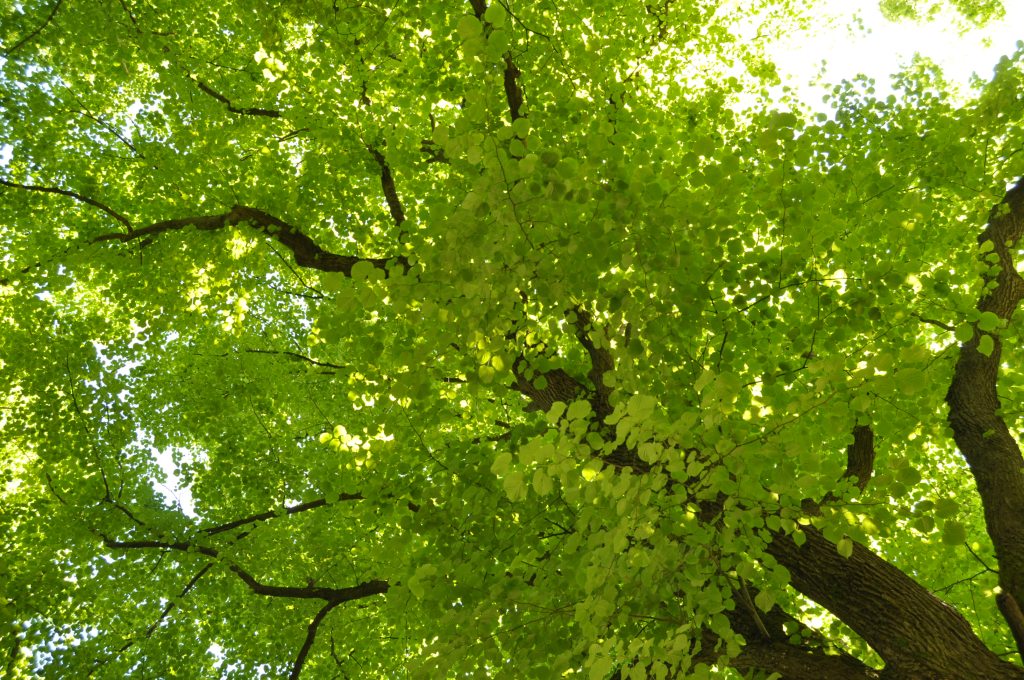
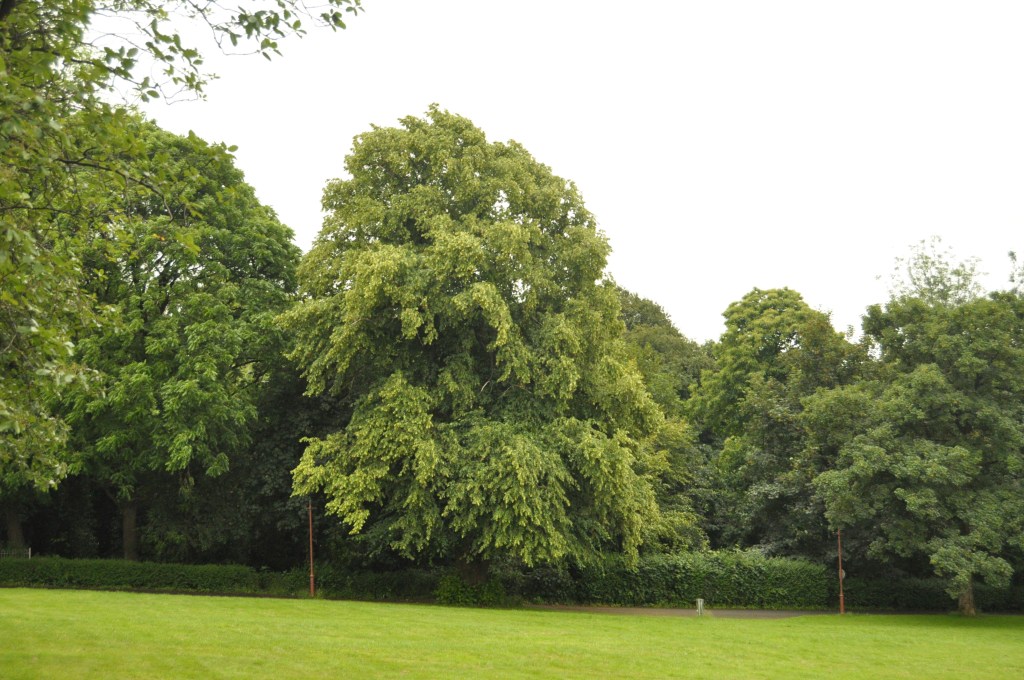
My next step was something of a wrong move in some ways, as it resulted in my going down a tributary away from the answer to my question, and one which in fact may have no real end, but it’s definitely the more enriching path, and with some amazing scenery which would have otherwise remained hidden to me by my brain, processing as it did visual input containing trees as ‘just some trees’.So a linden was a lime. What did they look like, and where could I find one to have a butchers? Much to my surprise, the flat that I was then occupying, in a leafy Victorian West End suburb of Glasgow had a number of them bracketing the front, so right outside my window they stood; and lining the edge of the crescent park across the road; and all the way down the street; and lining Great Western Road nearby. In fact, everywhere I went, once I had began to recognise lime trees, lime trees seemed to be.
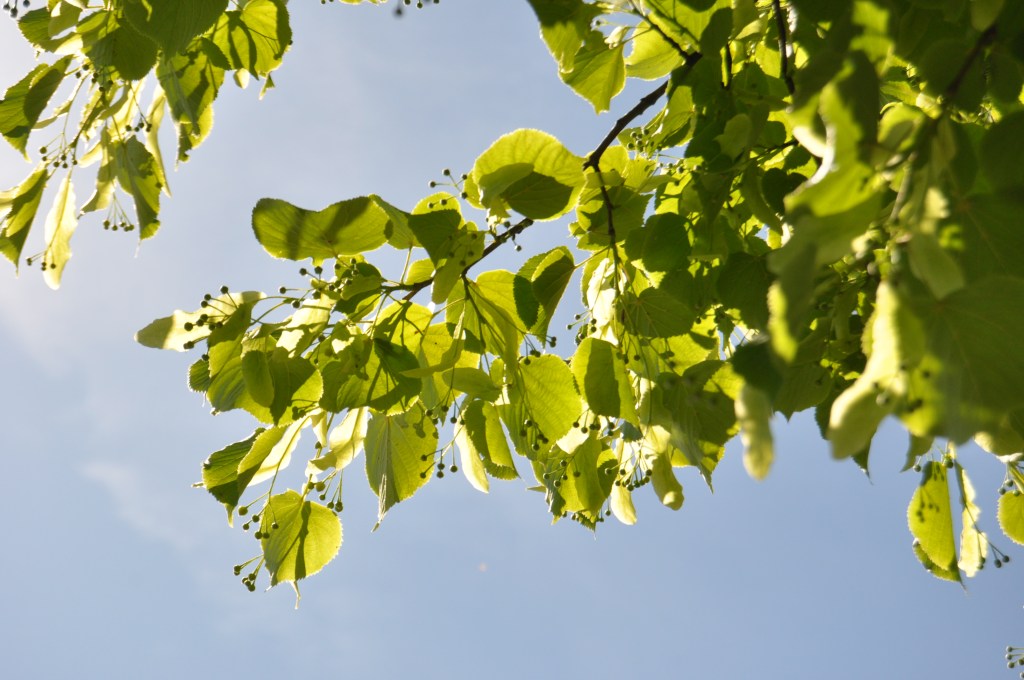
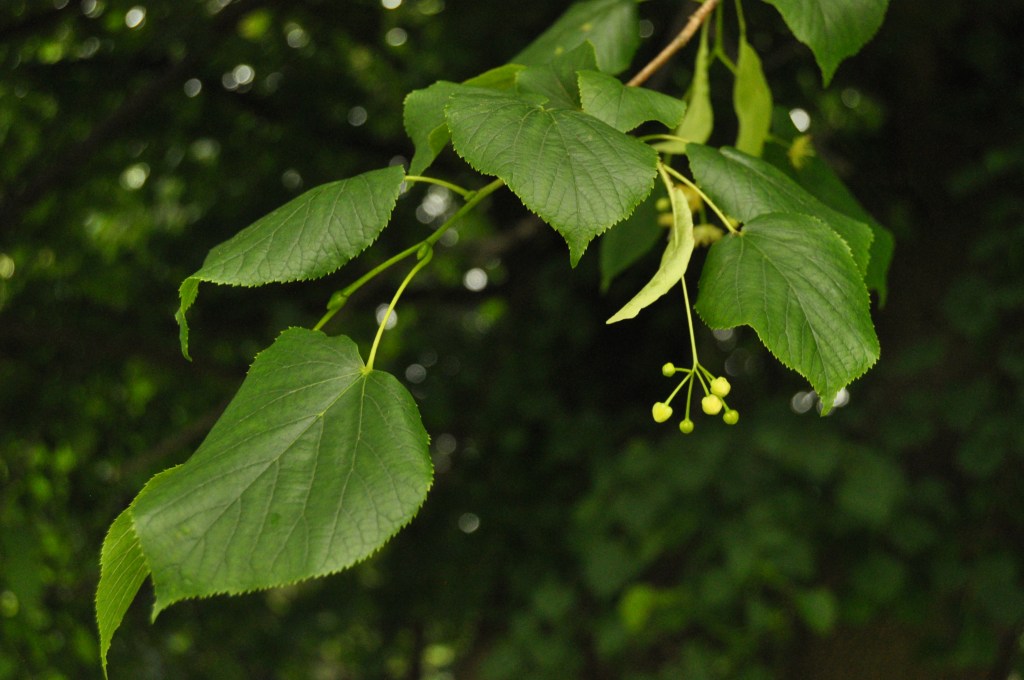
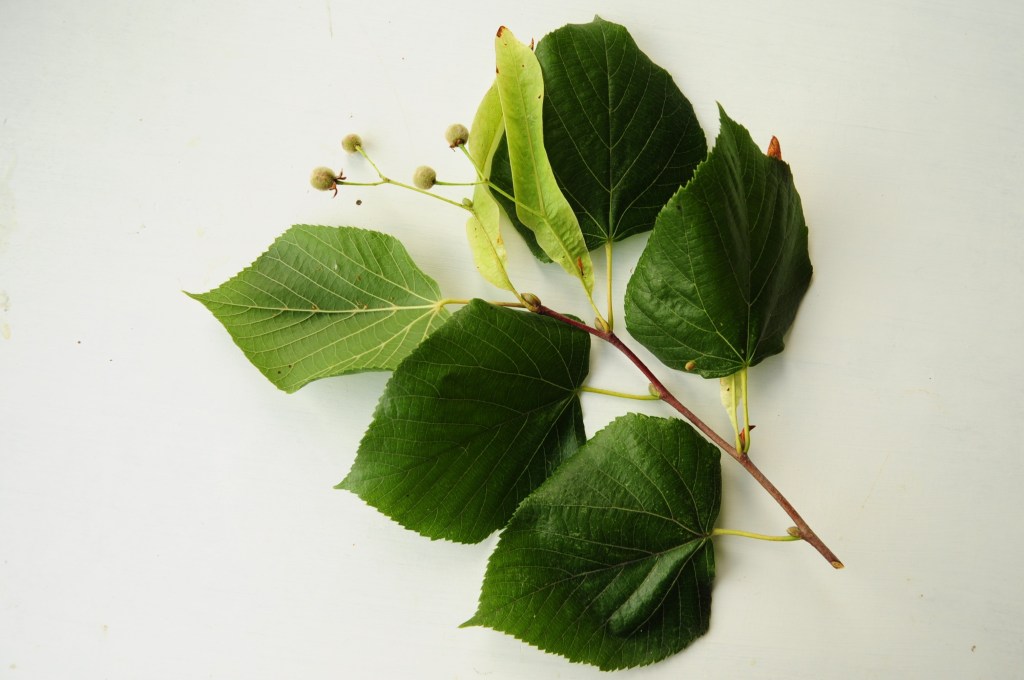
By and large what I was seeing was the Common Lime, a hybrid of the Small-Leaved Lime and Large-Leaved Lime, all three of which are considered post-ice age natives to Britain, but there are many more species around the globe, some of which you might find in parks or occasionally urban plantings. The limes outside my flat had asymmetrical heart shaped leaves, and once they had flowered, their long narrow leaf-like bracts, attached to the small pea-sized seeds on little stems somewhat reminiscent of some atomic era homeware designs would launch themselves a-twirling to the ground like the ‘helicopters’ from maple trees. Another thing that descended from them was honeydew, which sounds pleasant enough—it certainly was to the wasps who wanted to eat it off the cars below. It is also much prized by ants, who actually farm aphids on the trees (the brutes!) in order for an ample quantity of the sugar rich, sticky liquid to be produced, with the aphids as the processor, if you get my drift. The bark was mature and ridged on the ones I was seeing, having been planted by the Victorians, and often had knobbly bits, and at the base lots of protruding shoots (epicormic growth, as I later found out) would constantly be getting battled with by gardeners with sharp implements. Occasionally the trees would also be viciously pollarded like a really severe looking hair cut, wherein the branches are removed then allowed to regrow with vigour
Telling the species apart is somewhat of a black art which I’m currently trying to get my head to engage with, and can involve getting touchy feely with the leaves or looking for minute fuzzy ‘hairs’ or lack of on certain leaf and/or shoot parts. As a tentative and by no means robust dip in though, if the base of the trunk is putting out a lot of shoots or branches, that makes it more likely to be a Common Lime. If the leaf feels sort of velvetty (and this may reduce by autumn) you may be handling a Large-Leaved Lime. If it’s in flower and the flowers or seeds are jutting outwards or upwards defying gravity then that may well be a Small-Leaved Lime. Don’t be misled by the common names as being a useful clue, as leaf size varies a great deal, with Common Lime likely to have the largest leaves and potentially be the largest tree.
I’ve given you a head start there, so why not go out and see if you can find one yourself. And if you happen to find out what Bulgacov was inferring, write the answer on a post-it note and stick it on a lime tree, I’ll probably see it on my travels.


Leave a Reply