

A collaborative storytelling game about climate, community, and the places we call home
The final GALLANT Gathering took place from 9th to 11th November at the University of Glasgow’s Advanced Research Centre, bringing together researchers, partners, policymakers, practitioners and diverse community groups. Over the three days, we celebrated what GALLANT has achieved over the past 4 years and shared what we have learned together. As part of the programme, we ran a 90-minute session where around 30 people played It Takes a Village – a collaborative game about how communities can face environmental change together.
Playing It Takes a Village
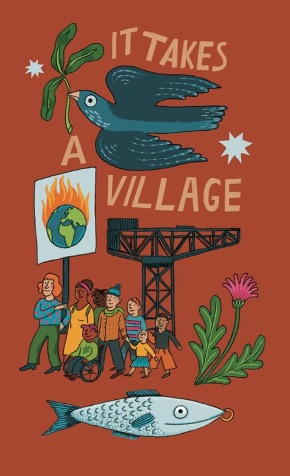
Unlike most games, It Takes a Village has no winners or losers. Instead, each group invents its own town, city or village and plays together for the prosperity and shared good of that place. The premise is simple: a storm is on its way, and the group has to work together to decide how its community will weather it.
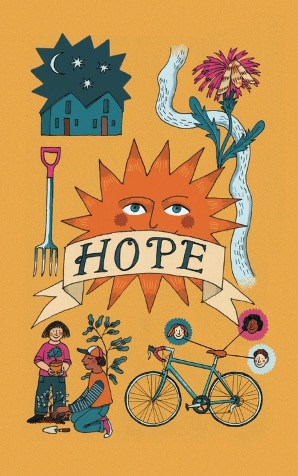
The game is driven by four kinds of cards: Identity, Dilemma, Hope, and Reflection. Players take turns reading a card aloud, then the group talks through the scenario and collectively agrees on how to respond. In doing so, they step into the role of decision-makers, weighing competing needs and working together to overcome whatever difficulties the storm brings.
The game itself grew out of an innovation fund project we ran with Climate Outreach in 2025, which brought community researchers together for a series of four upskilling workshops on communicating about climate effectively and becoming a trusted climate communicator. Rather than closing the project with a final report, we decided to create something that others could pick up and use. Adapted from the game For the Queen, It Takes a Village was developed by science communicator Sam Langford and brought to life with illustrations by local Glaswegian artist Lindsay Grime.
The session
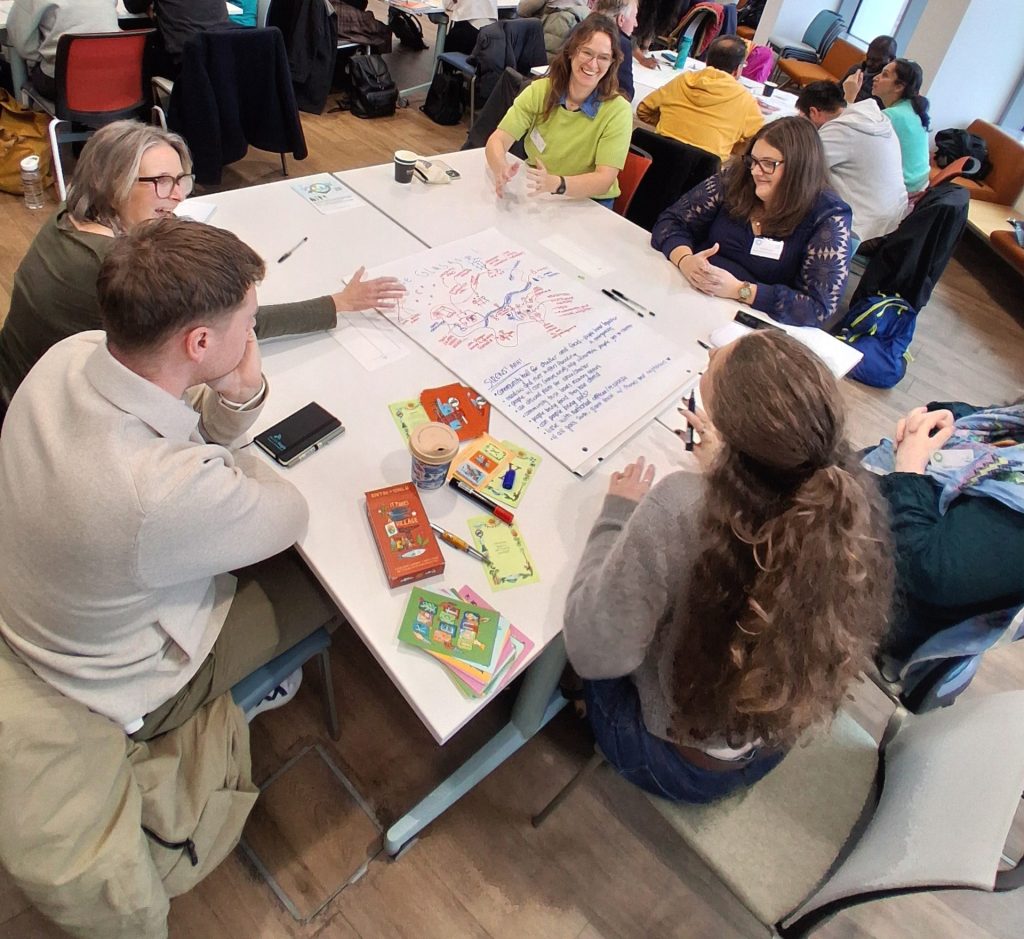
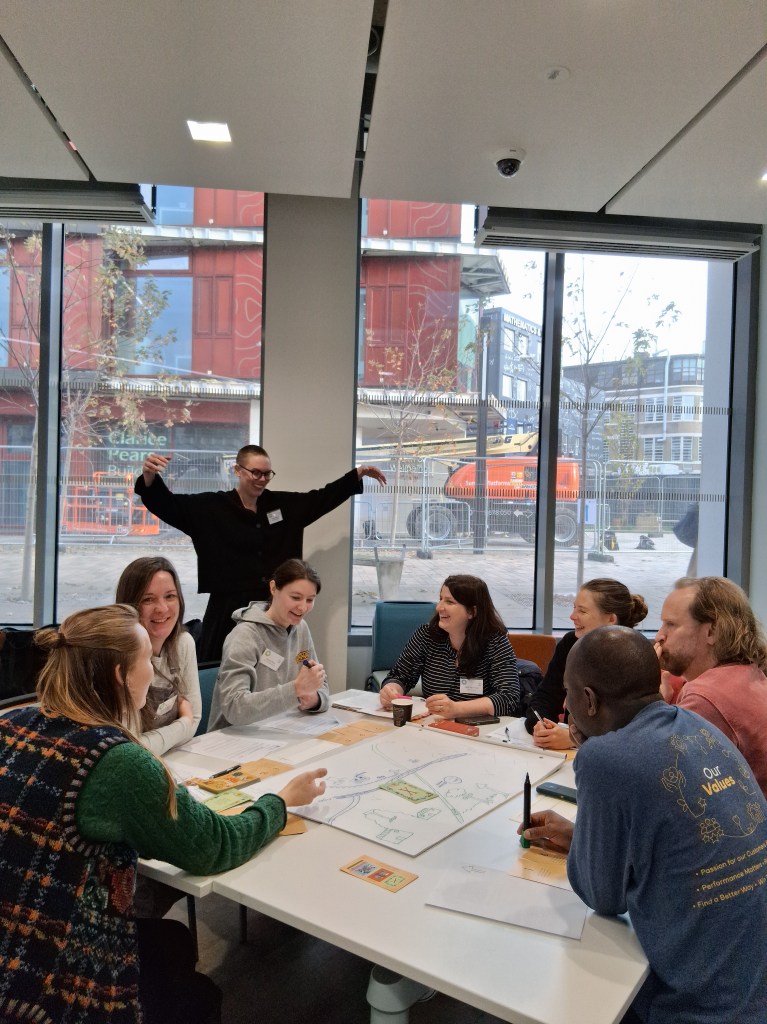
Around 30 researchers, community groups and third sector organisations joined us, split into five groups playing side by side. This gave us five very different approaches to building a world and navigating the storm, and that range of perspectives made the session especially valuable as a playtest.
Each group was free to set its world wherever it liked, and those choices led to two very different kinds of conversations. Several groups set their game in Glasgow and approached it with real seriousness. Rather than casting themselves as the decision-makers, they often thought about how the council or other existing bodies would respond, which grounded their discussions in the issues the city is actually facing. These included:
- Solar panels on public buildings and the cost of installing them
- Decarbonisation and the energy crisis
- Rising energy bills
- Jobs affected by climate change and future sources of employment
- Local protection of wildlife and what communities could do about it
The groups that invented their own places, by contrast, tended towards more utopian and idyllic worlds. Free from the existing structures that might limit what’s possible in a real city, they took a more openly collaborative, blue-sky approach to facing the storm.
What we learned
Neither approach is better than the other; they are simply different ways of approaching the scenario. A real setting brings practical constraints, political hurdles, and genuine trade-offs into focus, while an invented one frees people to imagine what a better response might look like. Either way, the game opened up conversations about difficult issues and how we might tackle them together. At the end of the session, each group took some time to reflect on how its game had gone, and a few themes came up multiple times:
Thinking on our feet: Many players realised that they didn’t really know what the plan would be if a disaster like this actually happened, so they found themselves responding to each card as it came rather than following any established plan. That led to some bigger questions: why don’t we already know what to do, and where are the resources, the knowledge and the leaders when we need them?
Coming together quickly: Groups banded together readily, drawing on their own knowledge rather than waiting for someone else to arrive with a plan. One group imagined a village with an active community hall and food hall, which they built up a little more with every card; they hoped outside help would come eventually, but their community didn’t wait for it. Another group compared the experience to SimCity, building up resilience while waiting for the volcano to hit and for key people to step in and save others.
The cards shape the story: One group drew a cluster of Hope cards early in the game and felt that this made a real difference to how things eventually turned out.
Does utopia last? Drawing on research into how communities respond to disasters, players noted that a kind of utopia often emerges in the aftermath, and wondered whether it can last. Groups kept arriving at the same answers, collective action and trust, so the harder question became how to sustain them over the long term. One player felt the game stripped modern life back to what actually matters, while others asked whether that ideal is realistic for people who have little time, energy or capacity to spare.
Learning from each other: Many of the players had only just met, and some didn’t know Glasgow very well at all, so working through the game together became a way of learning from one another. People also valued the creative and arts element of the game, though some pointed out that those who already think about these issues may not find the scenarios much of a shock, which is worth bearing in mind when putting groups together to play with.
All of this feedback from the five groups will help us continue refining the game and how we support others to use it.
What’s next
We’re continuing to share game packs with more groups, and we’d love to run more playtests with community groups in the months ahead.
If you’d like a copy of It Takes a Village for your community group or organisation, or if your group would be interested in helping us playtest it, please get in touch with GALLANT community collaboration research lead Ria Dunkley at Ria.Dunkley@glasgow.ac.uk
A huge thank you to everyone who played with us at the GALLANT Gathering and so generously shared their thoughts.


Leave a Reply